
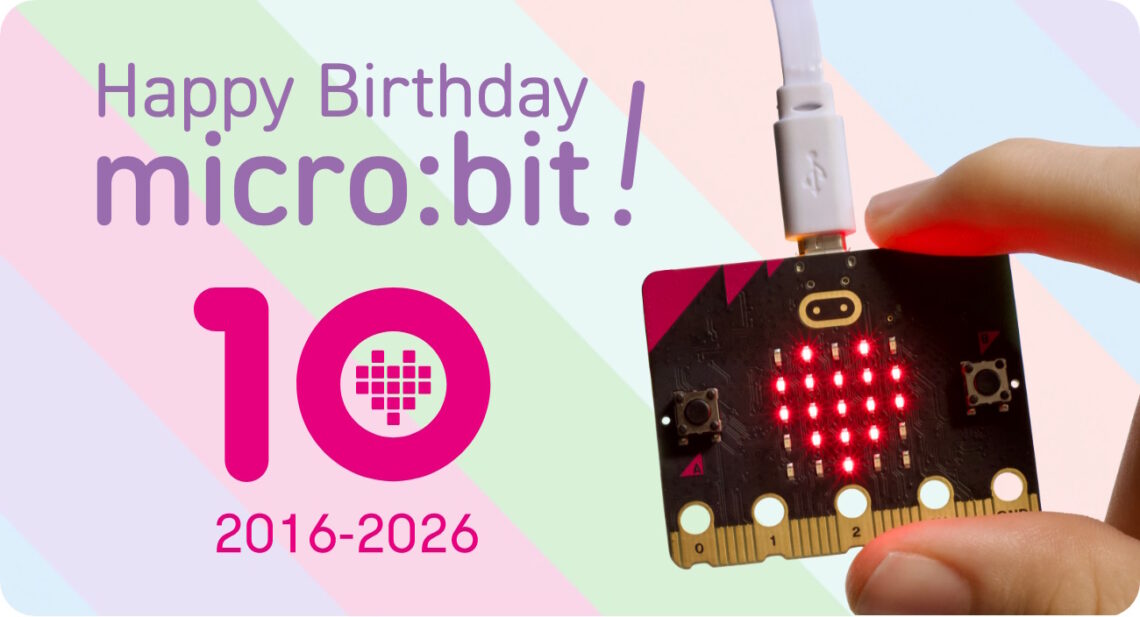
Marking a milestone in global STEM education, physical computing, and digital skills development.
Ten years ago, the BBC micro:bit launched across the UK with a bold ambition: to help every young person move from passive consumer to active creator of technology. A decade later, the impact of the Micro:bit Educational Foundation and its partners is unmistakable, and still accelerating.
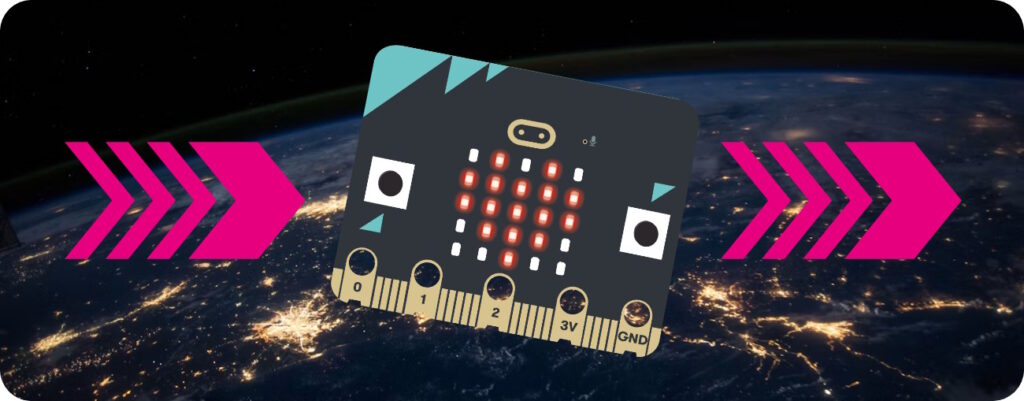
Since 2016, the micro:bit has helped 73.5 million young people in more than 85 countries build essential digital skills. From the original rollout of 1 million free devices to UK Year 7 pupils, to the distribution of almost 700,000 micro:bits to UK primary schools in 2023 and 2024, the device has become one of the world’s most successful physical computing platforms.
Today, the micro:bit is not just a classroom tool, it’s a global movement shaping the future of computing education.
Building Digital Skills for an AI World
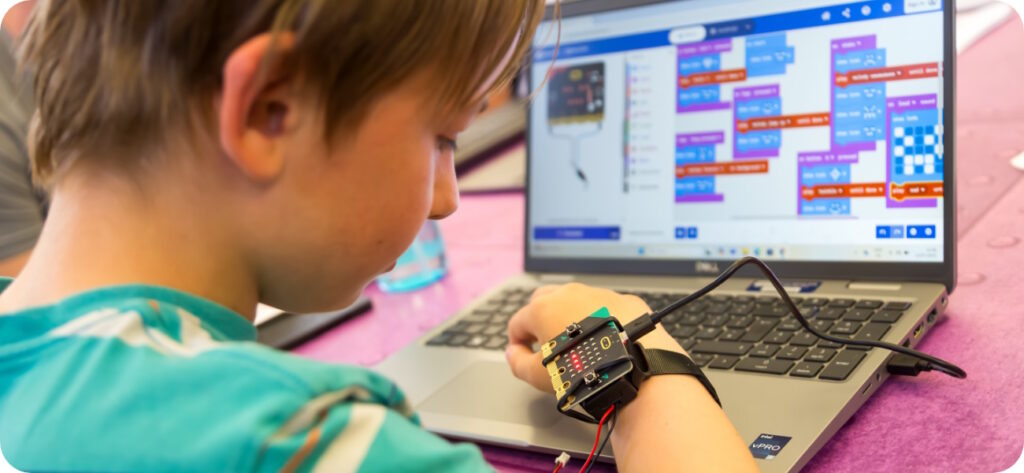
As artificial intelligence transforms how children learn and interact with technology, the Micro:bit Educational Foundation focuses on building strong foundations in computing, data literacy, AI literacy, logic, creativity, and problem-solving. With 39% of core workplace skills expected to change by 2030, these capabilities ensure young people can adapt as technology evolves.
The BBC micro:bit’s accessible design, paired with high-quality teaching resources, helps pupils understand, question, and build with digital tools, preparing them for a future where digital literacy is as essential as reading and maths.
Physical Computing: Making Learning Tangible
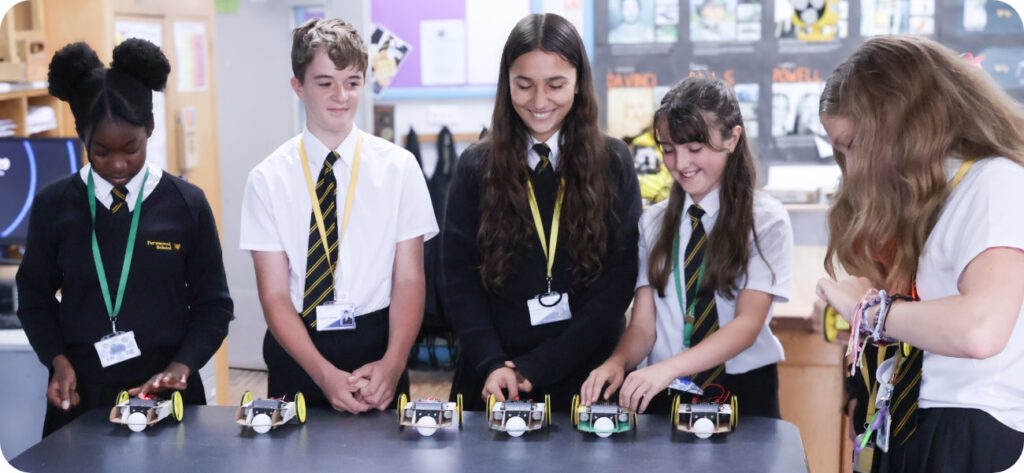
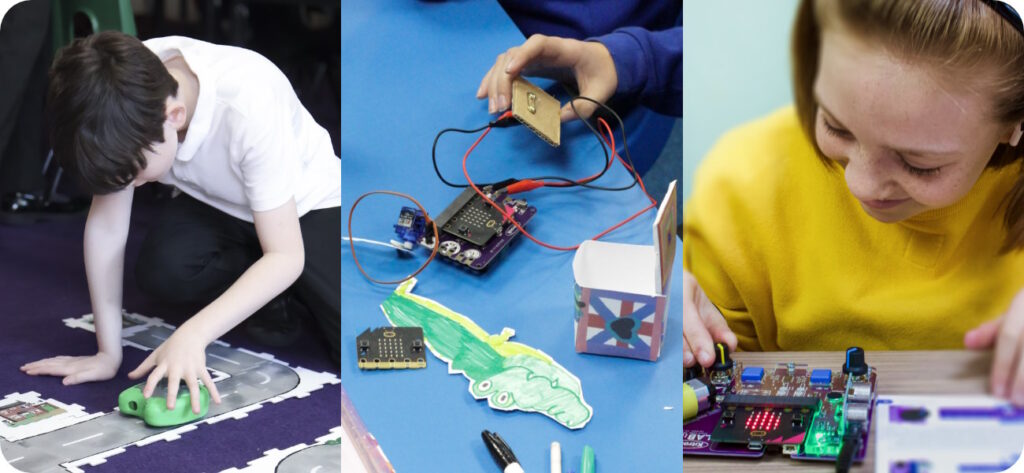
One of the micro:bit’s greatest strengths is its ability to connect abstract computing concepts to real-world challenges. Through hands-on, project-based learning, pupils gain confidence and creative problem-solving skills.
Examples from around the world include:
- Primary pupils in Fife programming digital pets
- Year 6 pupils in London building intelligent fans that react to rising temperatures
- A Malaysian project sensing water levels to activate a drain pump
- An earthquake early-warning prototype developed by students in Honduras
This kind of physical computing empowers learners to apply technology to meaningful challenges, from climate change to community safety.
Global Reach Through Collaboration
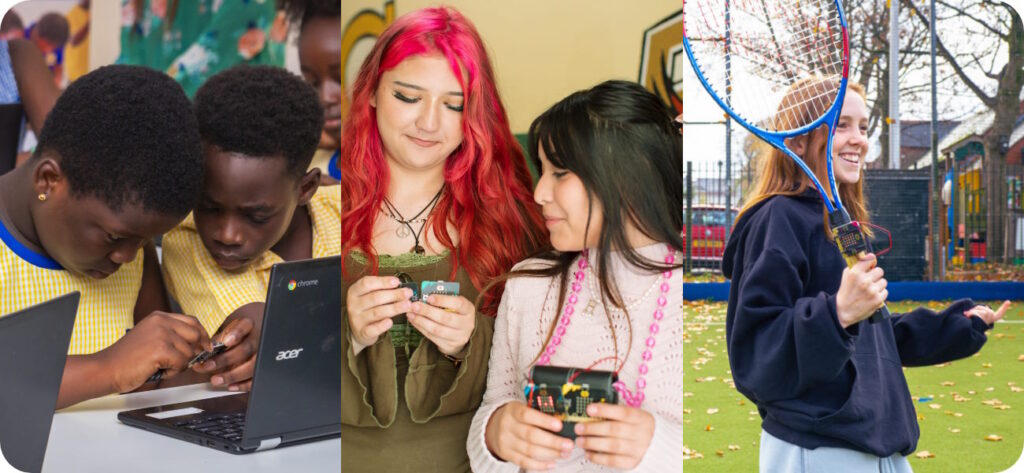
The micro:bit’s success has always been rooted in partnership. From the original coalition of 29 founding partners convened by the BBC, the ecosystem has grown to include more than 120 organisations across industry and education.
Key global initiatives include:
- UNICEF’s Tinkering with Tech and AI programme, reaching 165,200+ students across the Maldives, Montenegro, Honduras, Vietnam and Laos
- The British Council, training 23,000+ teachers and engaging 2 million children in more than 5,500 schools
- Expansion across the US following a successful pilot in Los Angeles County, bringing physical computing to schools in nearly every state.
These collaborations demonstrate the BBC micro:bit’s role as a cornerstone of modern STEM education and digital literacy worldwide.
Alumni Impact: A Generation Inspired
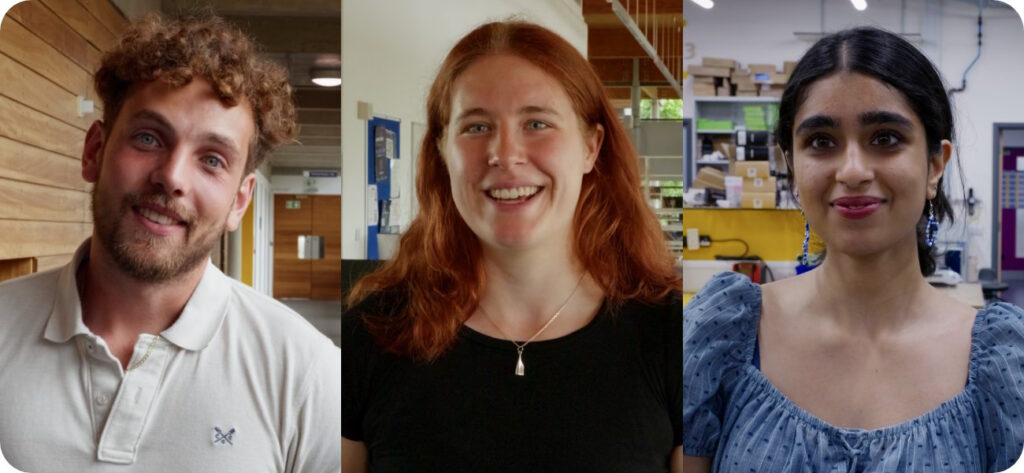
The long-term impact of the micro:bit is reflected in alumni from the original 2016 rollout. Many have gone on to study engineering, lead STEM initiatives, and support inclusive community projects.
Notable examples include:
- Nishka Mathur, now studying Mechanical Engineering at Imperial College London and winner of The Diana Award
- Femi Owolade-Coombes, founder of autism- and Tourette’s-friendly coding events and partner in donating micro:bits to young people in Bangladesh
Kitronik’s Role in the BBC micro:bit Journey
As one of the original founding partners, Kitronik recognised the BBC micro:bit’s potential immediately. We began designing kits and add-ons before the device even launched, ensuring teachers and learners had practical, classroom-ready resources from day one. Our early involvement is captured in one of our first micro:bit articles, published before the 2016 rollout: The BBC micro:bit Story So Far.
Our goal has always been to support the wider micro:bit ecosystem, helping educators deliver engaging physical computing lessons and giving pupils the tools to explore, invent, and build. Over the past decade, we’ve continued to expand our range of micro:bit accessories, project kits, and teaching materials to support high-quality digital learning.
Being part of the micro:bit story has always been about collaboration, not competition. The Foundation’s mission aligns closely with our own: empowering the next generation of creators, makers, and problem-solvers through accessible, hands-on digital education.
Looking Ahead: A Call to Action
As the micro:bit celebrates its 10th anniversary, the Micro:bit Educational Foundation is calling on industry and education leaders to renew the spirit of collaboration that launched the device a decade ago.
The challenge is clear: ensure every child, regardless of background, has access to high-quality digital education and the confidence to shape their own future in an AI-driven world.
At Kitronik, we’re committed to continuing that work, supporting teachers, inspiring learners, and helping the micro:bit reach even more young people in the years ahead.